
Basements
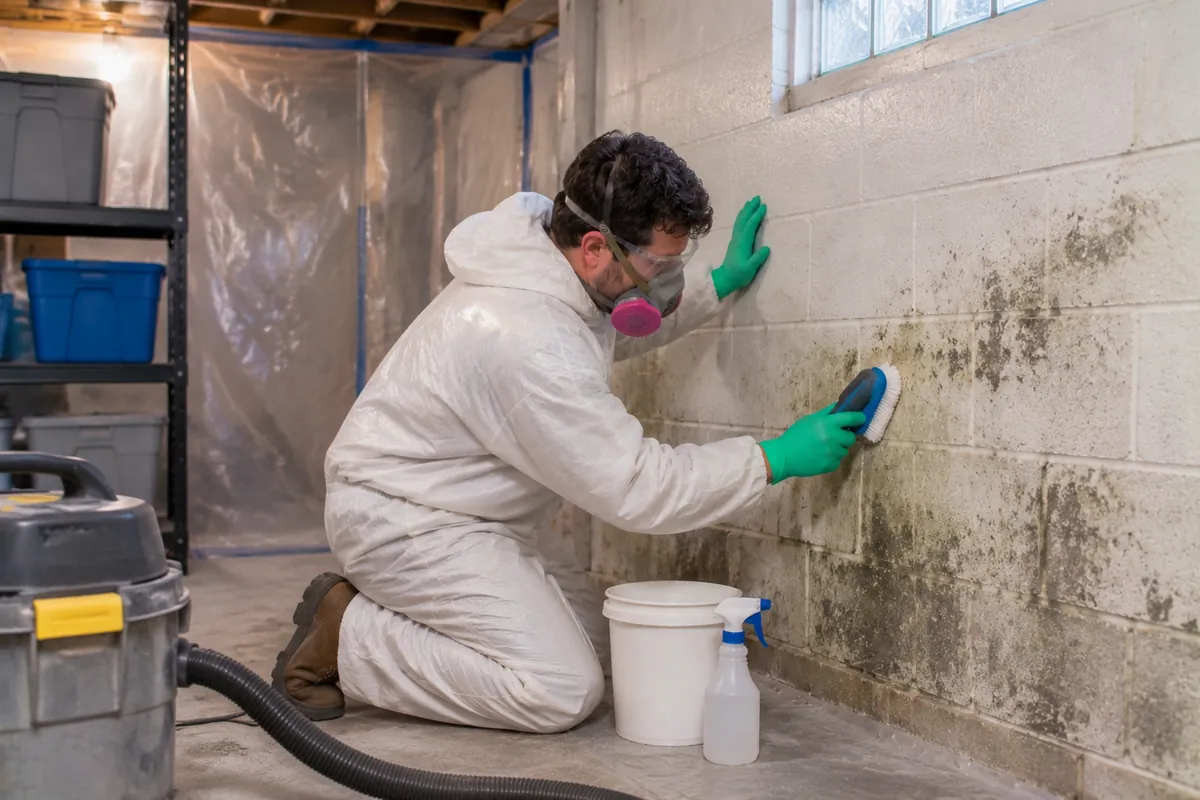
Growth on block walls, the bottom of drywall and stored boxes, usually from seepage or a past flood.
Visible growth, gone for good
Spots on the basement wall or a musty attic? Have the growth removed under containment and the damp spot that fed it found.
Where it grows
Growth looks different in each part of the house. These are the four most common places it shows up.
Call (414) 519-6916Growth on block walls, the bottom of drywall and stored boxes, usually from seepage or a past flood.
Dark staining on roof sheathing from bathroom fans venting into the attic or warm air leaking up in winter.
To remove mold from walls, the affected drywall is opened and the framing behind it is cleaned and dried.
Bathroom mold removal covers ceilings, grout lines and the drywall behind tubs where a weak fan leaves moisture.
Local housing
Homes built before 1950 are concentrated in the central part of the city. Stone and block foundations from that era often let water through after heavy rain, so growth tends to start at the base of the walls and behind finished basement paneling.
A professional mold removal visit in an older house checks the foundation walls, the floor drain and window wells along with the visible growth. Plaster walls are handled differently from drywall, since plaster can often be cleaned where drywall would come out.
Mold removal contractors also watch for older materials during demolition, like pipe insulation or tile that may need testing before it is disturbed. That check happens before any wall is opened.
Musty smell won't go away? Find out what's behind the wall.
Call (414) 519-6916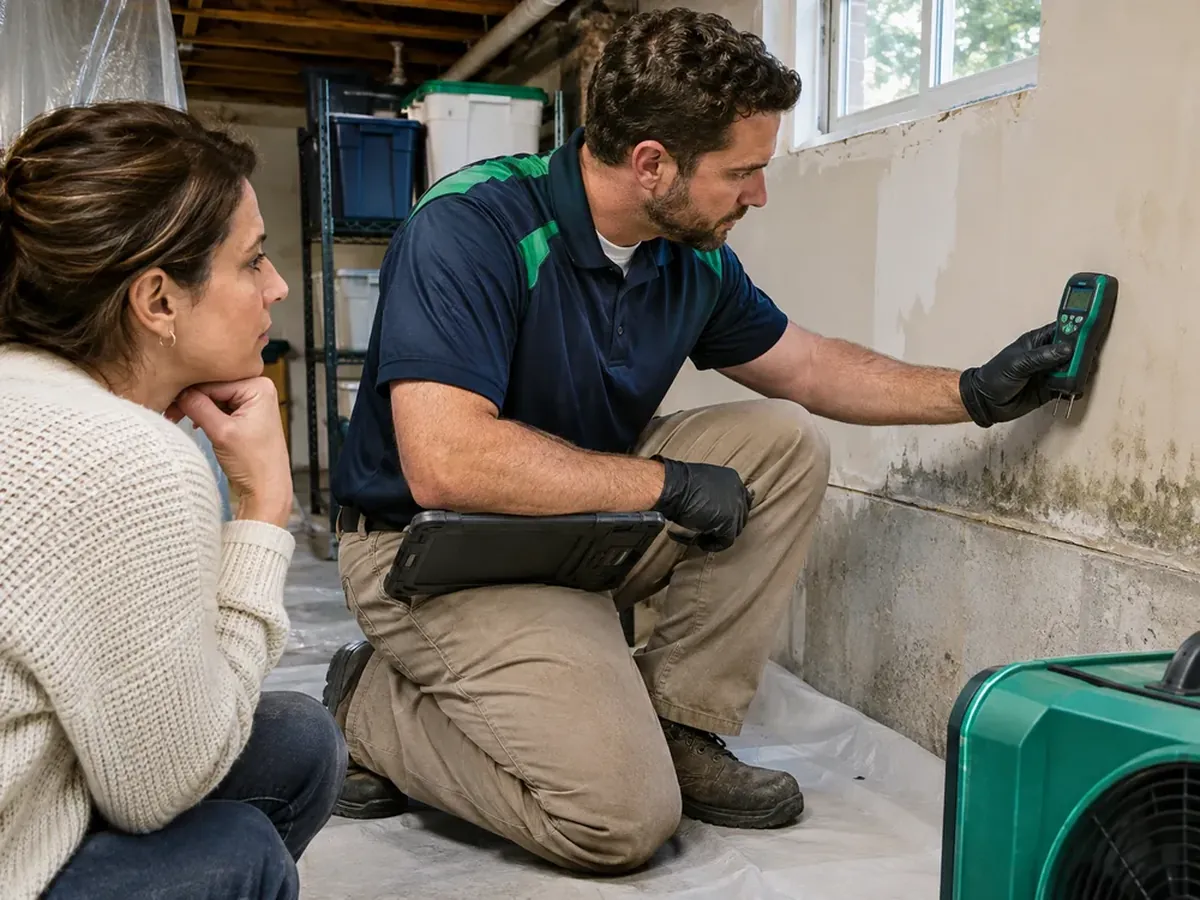
To eliminate mold for good, the water has to stop first. A mold removal specialist traces the damp spot back to its source, whether that is a downspout dumping beside the foundation, a leaking supply line or condensation on cold pipes.
Then the crew can remove the mold under containment: damaged drywall and insulation are bagged, and framing is HEPA vacuumed, wiped and treated.
Mildew and mold removal on hard surfaces like tile and sealed concrete is mostly cleaning; on porous materials it is removal. After the work, the space needs to stay dry, which may mean a dehumidifier, a fan upgrade or regrading outside.
Typical prices
Most mold removal jobs here typically cost about $850 to $2,200, and larger jobs that open walls or ceilings can run past $3,000. These are typical local ranges, not quotes.
Mold removal cost depends on the size of the area, how much material comes out and how hard it is to reach. Basement mold removal cost runs higher when finished walls and carpet are involved; an attic job depends on how much sheathing is stained.
Fixing the leak and rebuilding walls are usually separate. When the problem goes beyond one area, mold abatement services cover containment and cleanup across the whole house.
Straightforward answers
Yes. Milwaukee mold removal is available across Milwaukee, WI and South Milwaukee; call (414) 519-6916 to describe it.
Sometimes. Surface growth on sound, hard materials can be cleaned in place, but growth inside drywall or insulation means opening the wall.
A lasting musty smell, bubbling paint, staining or a high moisture reading are common signs. A visit with a moisture meter confirms it before anything is opened.
Small spots on grout are a cleaning job. Growth that comes back on the ceiling or spreads behind the tub usually points to a fan or leak problem worth a visit.
Usually, once the growth and damp materials are out and the area is dry. A smell that stays often means more growth or moisture is hidden nearby.
Tell us where you see it and how long it has been there. That's enough to plan the first visit.