
Moisture readings
A moisture meter maps how far the water spread, including behind finished walls and under flooring.
After floods and long leaks
Flooded basement or a leak that ran for weeks? Get wet, moldy materials removed safely so the space can dry and be rebuilt.
The sequence
Any active leak or standing water is dealt with first, because removal on wet materials only moves the problem.
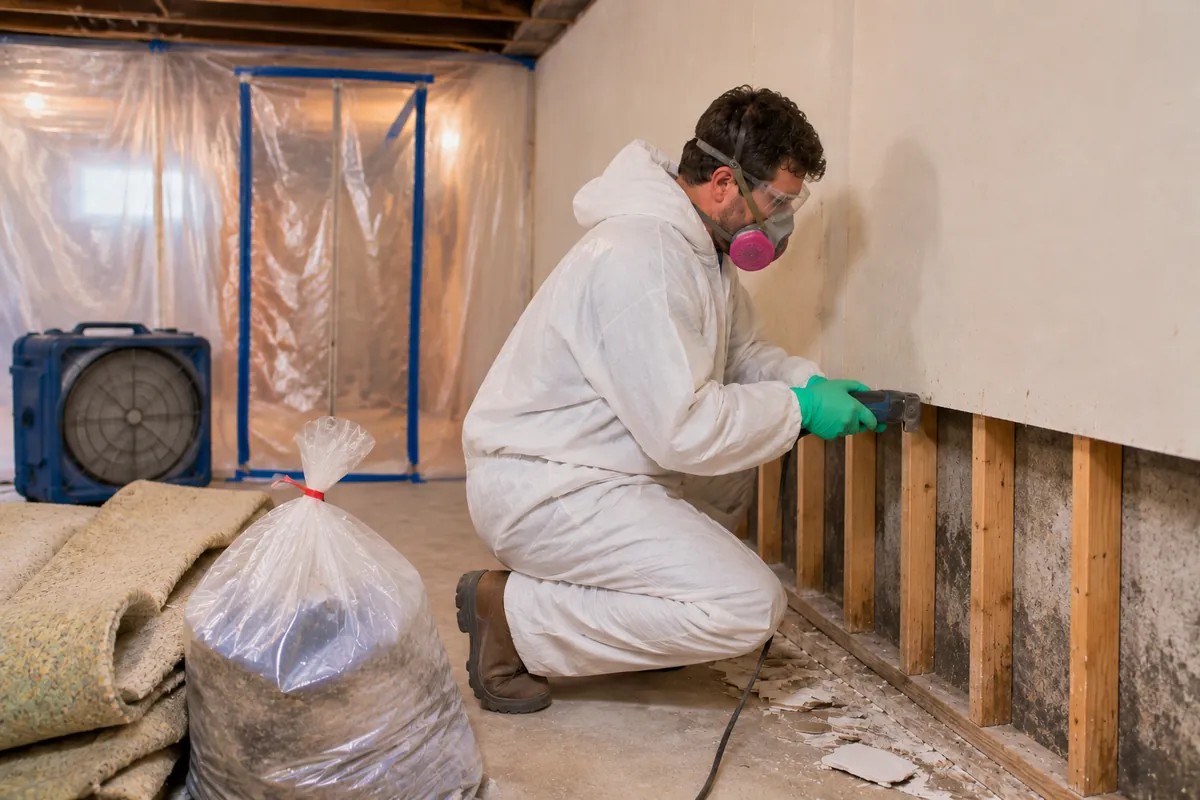
Plastic barriers, taped seams and covered vents isolate the work zone from the rest of the building.
A HEPA air scrubber exhausts air from the zone so dust and spores stay inside it during removal.
Drywall, insulation, carpet and ceiling tile with growth are cut out, bagged inside containment and carried out.
Framing and hard surfaces are HEPA vacuumed, wiped and treated with an antimicrobial, then left to dry before rebuilding.
The August 2025 storm dropped up to 14.55 inches of rain in 24 hours. The regional deep tunnel reached capacity and basements across Milwaukee, Wisconsin flooded, many with sewer backup water mixed in.
Backup water is treated as contaminated, so carpet, padding, drywall and insulation it touched are removed rather than cleaned. Mold remediation services for these basements start with removal and drying, then the cleaning and treatment of what is left.
Professional mold remediation also checks the walls above the water line. Drywall wicks moisture upward, so growth often shows a foot or more above the high-water mark.
Before the first cut
Planning the job comes before any demolition. Mold remediators look at four things first.
Call (414) 519-6916A moisture meter maps how far the water spread, including behind finished walls and under flooring.
Furnace returns, open stairwells and shared ducts are found and covered so spores don't travel through the building.
Each material is sorted into remove, clean or keep, based on whether it is porous and how far growth has gone.
A path for bagged debris is planned so it never crosses clean rooms uncovered.
Basement took on water? Get it checked before mold sets in.
Call (414) 519-6916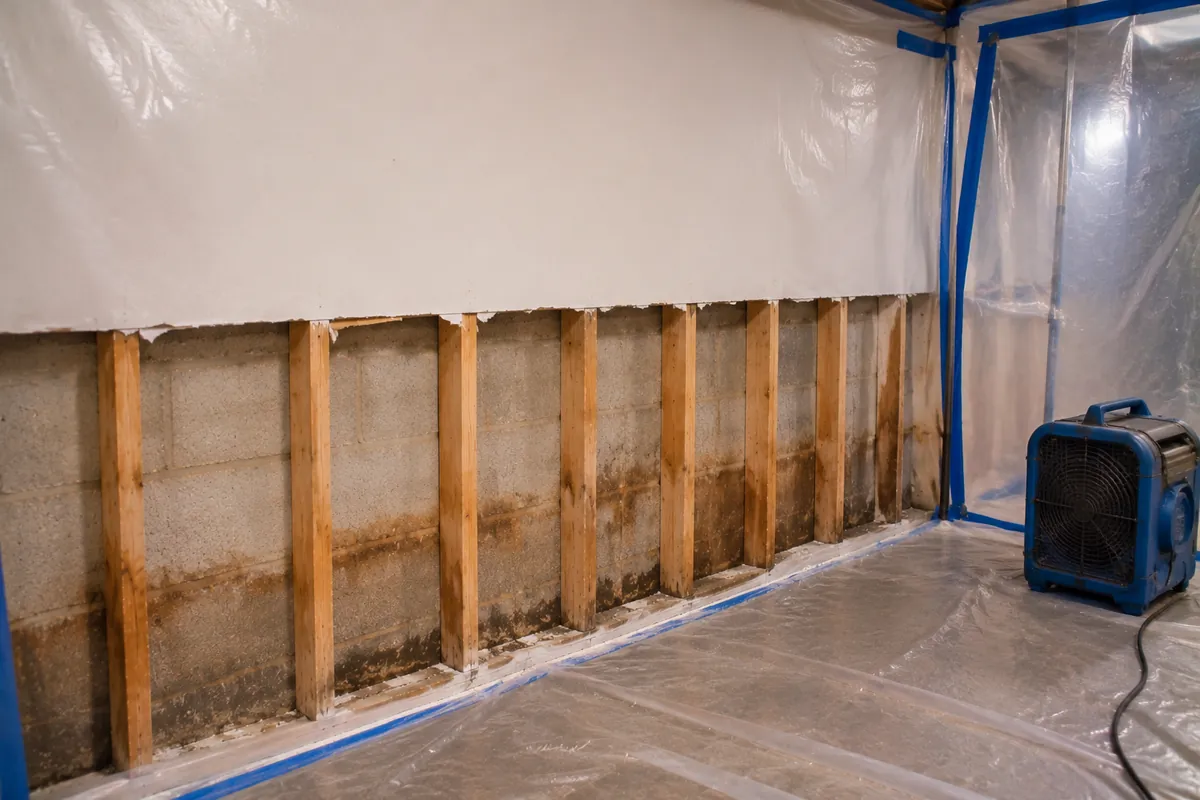
Glass, metal, concrete and sound wood can usually be cleaned and kept. Drywall, ceiling tile, carpet pad and fiberglass insulation with growth are removed, because cleaning doesn't reach inside them.
A mold remediation specialist cuts drywall in a straight line above the highest wet point, so new board can go back cleanly once the framing dries.
Mold remediation contractors finish by HEPA vacuuming every surface in the zone, since settled dust carries spores well beyond the visible spots.
Typical prices
Most mold remediation jobs here typically cost about $850 to $2,200, and larger jobs that open walls or ceilings can run past $3,000. These are typical local ranges, not quotes.
The mold remediation price rises with square footage, the amount of drywall and insulation removed, containment size and how long the air scrubbers run. Costs of mold remediation after sewer backup sit higher because more material comes out.
Rebuilding walls and fixing the leak are usually separate. Photos and notes from the visit can help with an insurance claim. For an overview of every service, see mold abatement.
Before you book
Yes. Work is available in Milwaukee, WI and South Milwaukee; call (414) 519-6916 to describe the damage.
Not usually when growth is visible and the water source is known. Testing helps when the source is unclear or a buyer, landlord or insurer wants documentation.
Often yes when the work is contained in a basement. Work near bedrooms or the furnace may mean staying elsewhere until containment comes down.
It depends on the policy and the cause. Sudden water damage is treated differently from long-term seepage, so call the insurer early and keep photos.
It can if the area gets wet again. Remediation removes the growth; fixing the leak, seepage or humidity keeps it from returning.
Describe the flood, backup or leak and where it reached. A local contractor can walk through the space and lay out the work.