
A lasting musty smell
An odor that hangs around after cleaning usually means growth or moisture somewhere hidden.
Find what's causing the smell
Musty smell but no visible spots? Find out where the moisture and growth are hiding before you open walls or spend on repairs.
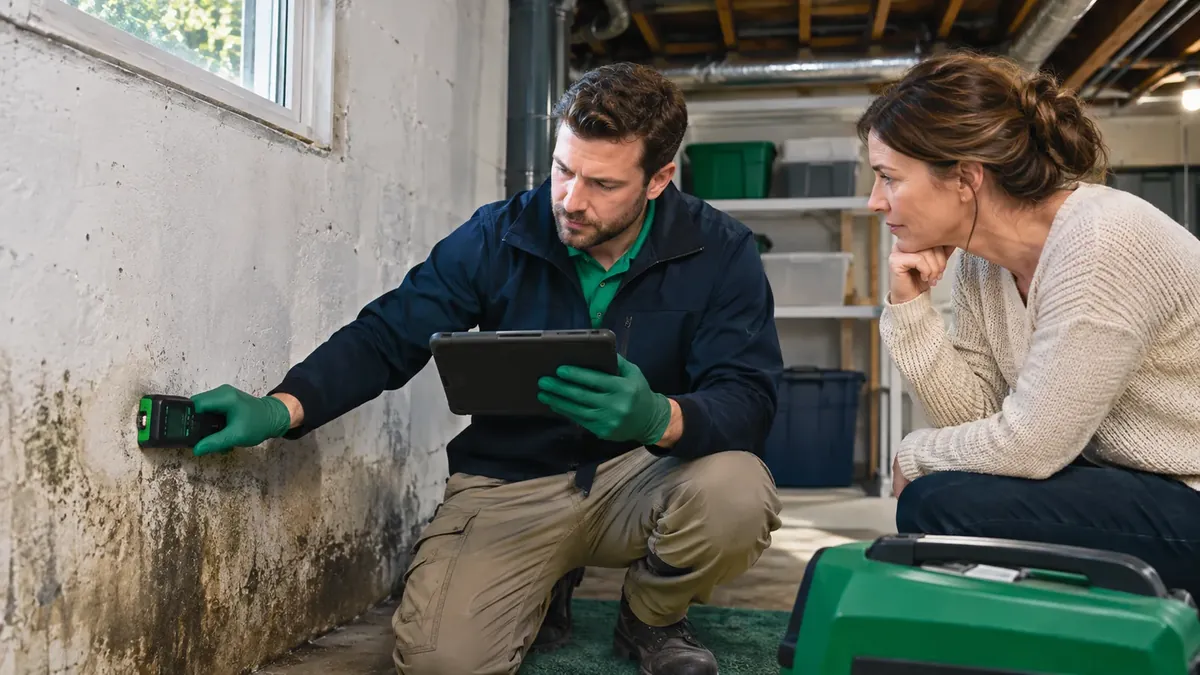
A visit starts with where you notice the problem, then works outward. Visible growth, staining, peeling paint and soft drywall are checked, along with the plumbing, foundation walls, windows and vents nearby.
A moisture meter shows damp areas that look dry, and a mold evaluation follows the damp spots to where they lead. Many Milwaukee mold inspection visits end in the basement, even when the smell started upstairs.
Spring rainfall in the area has risen more than any other season since 1950, about 0.31 inches per decade. Walls that stayed dry for years can start to show dampness in April and May, so spring visits include window wells and the sump pit.
Smell it but can't see it? Get the source found first.
Call (414) 519-6916Reasons to call
These are the most common reasons people book a visit.
Call (414) 519-6916An odor that hangs around after cleaning usually means growth or moisture somewhere hidden.
Materials that stayed wet more than a day or two can grow mold behind the surface.
A buyer or seller may want findings on record before closing.
Opening walls that hold growth can spread it, so a check before demolition helps plan the job.
How the visit runs
When the smell or staining started, any past leaks or floods, and which rooms are affected.
A room-by-room look at the affected area and the spaces around it.
Moisture meter and thermal camera readings on walls, floors and ceilings.
Air or surface samples only when the source is unclear or documentation is needed.
What was found, where the moisture is coming from and what work makes sense next.
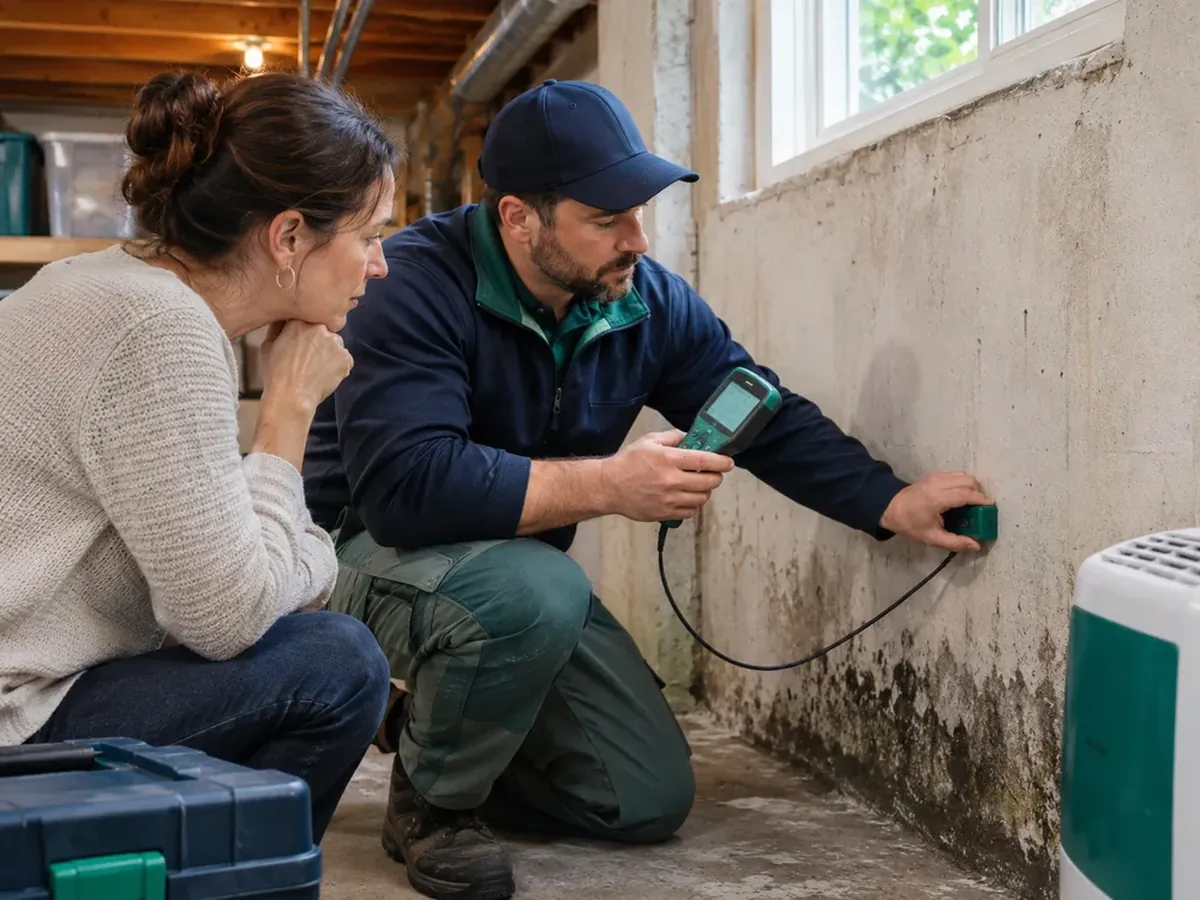
A mold assessment connects three things: where water is getting in, how air moves through the house and where growth is likely hiding. A thermal camera can show cold, damp spots behind drywall that a moisture meter then confirms.
Airflow matters because a bathroom fan venting into the attic or a return duct in a damp basement can carry moisture and spores to other floors. A mold specialist checks those paths as part of the visit.
Mold inspection and testing are often paired, but testing isn't always needed. When growth is visible and the source is clear, the findings go straight to a mold removal inspection plan.
Typical prices
A mold inspection typically costs about $300 to $1,050, and on-site testing about $250 to $500 when samples are added. These are typical ranges, not quotes.
The price depends on the size of the house, how many areas need checking and whether lab samples are taken. A single basement costs less than a whole-house check with air samples on each floor.
Removal is priced separately once the findings show what's needed. To compare what each next step involves, start with mold abatement milwaukee.
Before the visit
Yes. Visits are available across Milwaukee, WI and South Milwaukee; call (414) 519-6916 to set one up.
A mold inspector checks visible growth, moisture readings, plumbing, foundation walls, attic ventilation and air paths that could carry spores.
No. An inspection is a visual and moisture check; testing adds air or surface samples sent to a lab. Many visits don't need lab samples.
No. Leave the area as it is so the growth and staining can be seen. Stop any active leak if you can do it safely.
Often, using moisture meters and thermal imaging to spot damp areas. Confirming growth may mean a small opening or a wall-cavity sample.
Describe the smell, stains or past leaks. A local contractor can check the space and explain what they find.