
Visible Suspect Growth
Discoloration, spotting, fuzzy growth, or unusual surface changes are documented by location, extent, and affected material. Appearance alone does not identify a mold species.
Mold inspection in Milwaukee
Get a careful property assessment, plain-language findings, and practical recommendations based on visible conditions and moisture evidence.

If you need a mold inspector in Milwaukee, a visual assessment is the starting point for understanding what is happening, where moisture may be entering, and what should happen next. Mold Abatement Milwaukee inspects accessible areas for visible growth, water staining, damp materials, musty odors, condensation, and other signs of moisture trouble.
Our work as a professional mold company in Milwaukee centers on careful observation and useful documentation. We ask about leaks, flooding, recurring odors, indoor humidity, and recent repairs before examining the areas of concern. The resulting findings distinguish observed conditions from suspected causes and identify reasonable next steps. That gives owners, buyers, landlords, and property managers a clearer basis for making decisions.
An inspection is not a substitute for fixing an active roof, plumbing, drainage, or condensation problem. Mold can return when the moisture source remains. A useful assessment therefore looks beyond the visible patch and considers nearby materials, ventilation, past water paths, and the limits of what could be observed without destructive investigation.
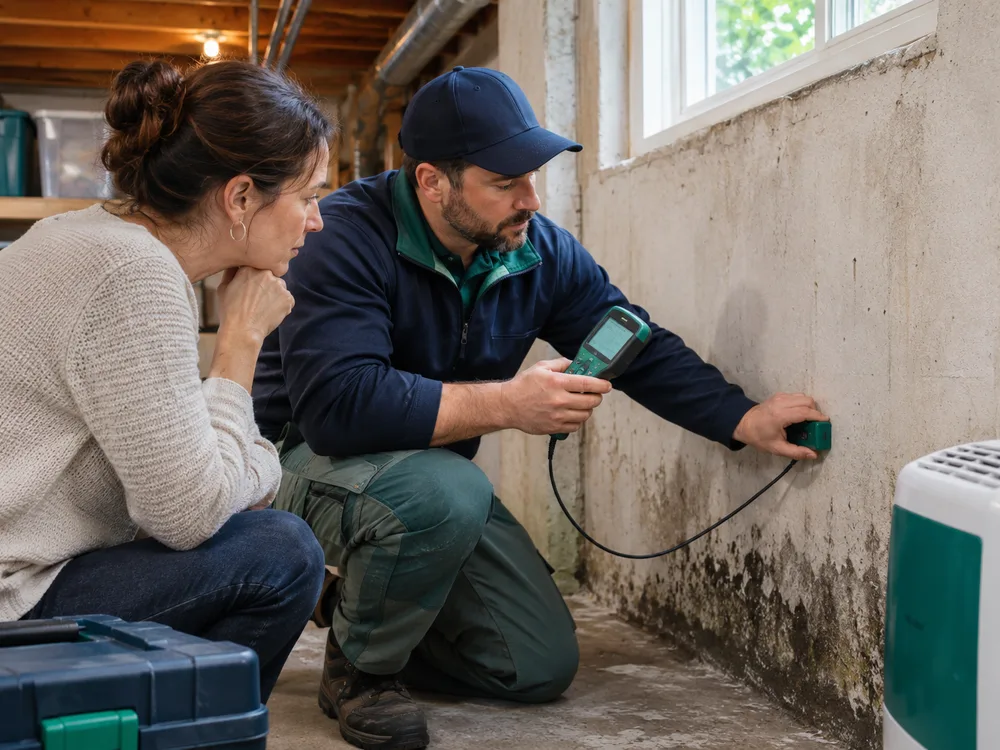
The assessment begins with the concern that prompted the visit, then expands to accessible areas that may be connected to it. Depending on the property, that can include basements, attics, bathrooms, utility spaces, kitchens, exterior-facing walls, window areas, and rooms beneath plumbing fixtures.
Inspectors commonly use a pin or pinless moisture meter to compare suspect materials with nearby reference areas. Relative humidity readings help identify indoor conditions that may support condensation. Thermal imaging may reveal temperature patterns worth checking, but it does not detect mold and cannot prove that a material is wet. Any unusual pattern should be verified with other observations or moisture measurements.
Milwaukee's cold winters create conditions in which warm indoor air can condense on cold surfaces, especially where insulation or air sealing is limited. Spring snowmelt and heavy rain can also expose foundation, grading, gutter, or drainage problems. Those local conditions make moisture history and building-envelope observations especially relevant.
Inspection details
Discoloration, spotting, fuzzy growth, or unusual surface changes are documented by location, extent, and affected material. Appearance alone does not identify a mold species.
The inspection considers plumbing leaks, foundation seepage, roof entry, condensation, poor drainage, and elevated indoor humidity when evidence supports those concerns.
Swollen trim, deteriorated drywall, staining, peeling coatings, and damaged insulation can reveal the path or duration of unwanted moisture.
Bathroom exhaust, attic airflow, window condensation, and cold exterior surfaces may help explain recurring dampness in Milwaukee's heating season.
Inspectors examine accessible areas around plumbing, under sinks, near mechanical equipment, and along foundation walls without promising visibility inside closed assemblies.
Findings may call for moisture correction, further investigation, targeted sampling, material removal, cleaning, drying, or evaluation by the appropriate building trade.
Assessment sequence
Tell us what you have seen or smelled, when it started, and whether the property has had leaks, flooding, condensation, or prior repairs. Photos and maintenance records can help establish a timeline.
The inspector performs a systematic visual review and checks relevant building materials for moisture. Access limitations, stored belongings, finished walls, and unsafe areas are documented rather than guessed at.
Air or surface sampling may be appropriate when the question cannot be answered through visual and moisture inspection alone. Samples should address a specific decision, and laboratory analysis should be interpreted alongside property conditions.
You receive a clear explanation of observed conditions, likely moisture contributors, and practical recommendations. Urgent water control and safety concerns are separated from maintenance items and optional further investigation.
The findings can help define the affected area and guide conversations with plumbers, roofers, drainage contractors, HVAC professionals, or remediation providers when their work is warranted.

Milwaukee has a wide mix of building ages and construction types, so the inspection approach should match the property. Bay View includes many older houses where finished basements and later renovations can conceal portions of foundation walls. Sherman Park has substantial older housing stock, making roof history, plumbing updates, and basement moisture records useful context. In Riverwest, older residential buildings may contain several layers of repair or remodeling that complicate the path of a past leak.
East Side apartments and multifamily buildings often require attention to shared plumbing lines, stacked bathrooms, roof drainage, and exterior walls exposed to Lake Michigan weather. In Wauwatosa, mature neighborhoods include homes of varied ages where basement finishes can hide staining or seepage evidence.
These traits do not mean a property has mold. They identify questions worth asking. An inspector should rely on evidence in the individual building rather than assumptions about its neighborhood or age.
Purposeful sampling
Sampling can answer a focused question, but collecting samples without a clear purpose may add cost without changing the recommendation. When visible growth and a moisture source are already evident, the priority is often to correct the water problem and address affected materials.
Air samples may be considered when occupants report persistent concerns but no source is visible, when contamination may have spread beyond an identified area, or when a written protocol requires data. Surface samples can help characterize growth on a particular material. Laboratories may analyze samples by microscopy or culture, depending on the objective. Results are snapshots of conditions at the time of collection and should not be treated as a complete measure of health risk.
The U.S. Environmental Protection Agency states that there are no federal limits for airborne mold or mold spores. For that reason, inspection findings should not be reduced to a simple pass-or-fail number. Visible conditions, moisture evidence, building history, sampling method, and laboratory comments all matter when interpreting results.
Inspection-based pricing
A Milwaukee mold inspection typically costs about $300 to $700, while larger properties, broad complaint areas, or laboratory sampling may raise the total. A limited assessment of one accessible concern usually costs less than a whole-property review with several samples.
Final pricing depends on property size, inspection scope, access, the number and type of samples, laboratory fees, and reporting needs. Sampling should be recommended for a defined reason rather than added automatically. The exact cost is confirmed during scheduling or after the initial consultation clarifies the requested scope.
Addressing the moisture source early can keep the affected area from becoming harder to evaluate. Describe the location, visible signs, odors, and known water history so the inspection can be scoped appropriately.
Book Your Free InspectionClear answers before scheduling
Scheduling depends on current availability, the property's size, and whether laboratory sampling is requested. Active leaks should be stopped as soon as safely possible rather than waiting for the inspection. If materials are wet, share when the water event occurred and whether professional drying has started.
Testing is often unnecessary when visible growth and the moisture source are already clear. The inspection can document affected materials and help define practical next steps. Sampling may add value when the source is hidden, the extent is uncertain, or a transaction or written protocol requires specific data.
A focused inspection may take about one to two hours, while a larger or more complex property can take longer. Finished basements, multifamily layouts, stored belongings, several complaint areas, and sample collection all affect the duration. Laboratory results require additional processing time.
A standard inspection evaluates visible and accessible conditions without opening finished assemblies. Moisture meters and thermal imaging can identify areas that deserve closer attention, but neither can confirm mold inside a wall. If evidence supports destructive investigation, the recommendation should explain where and why it may be needed.
An inspection is useful when a Milwaukee property has musty odors, visible staining, prior water damage, basement seepage, or concerning disclosures. It should complement the general home inspection rather than replace it. Arrange access to attics, basements, utility areas, and relevant maintenance records when possible.
The assessment can identify observed moisture evidence and likely contributors, but some causes require diagnosis by another trade. For example, plumbing leaks, roof defects, HVAC issues, and foundation drainage problems may need confirmation by the appropriate contractor. The report should separate confirmed observations from informed recommendations.
Leave suspect materials undisturbed, avoid painting over stains, and provide safe access to the affected area. Gather photos of earlier conditions, leak records, repair invoices, and details about when odors occur. Do not run fans across suspected growth because air movement can disturb settled particles.
A mold inspection documents building conditions but does not provide a medical diagnosis or guarantee that a property is safe for every occupant. People with health concerns should consult a qualified healthcare professional. The inspection supports property decisions by identifying moisture evidence, affected materials, access limitations, and recommended corrective work.
Tell Mold Abatement Milwaukee what you have observed and where the concern is located. We will help define an appropriate inspection scope and explain the next steps for your property.