
Inspection and Scope
The work begins with a visual assessment of affected spaces, moisture checks, and a review of where water may be entering or collecting. The findings guide containment and material-removal decisions.
Mold remediation in Milwaukee
Thorough inspection, controlled removal, and moisture-focused recommendations for healthier conditions in your home or business.
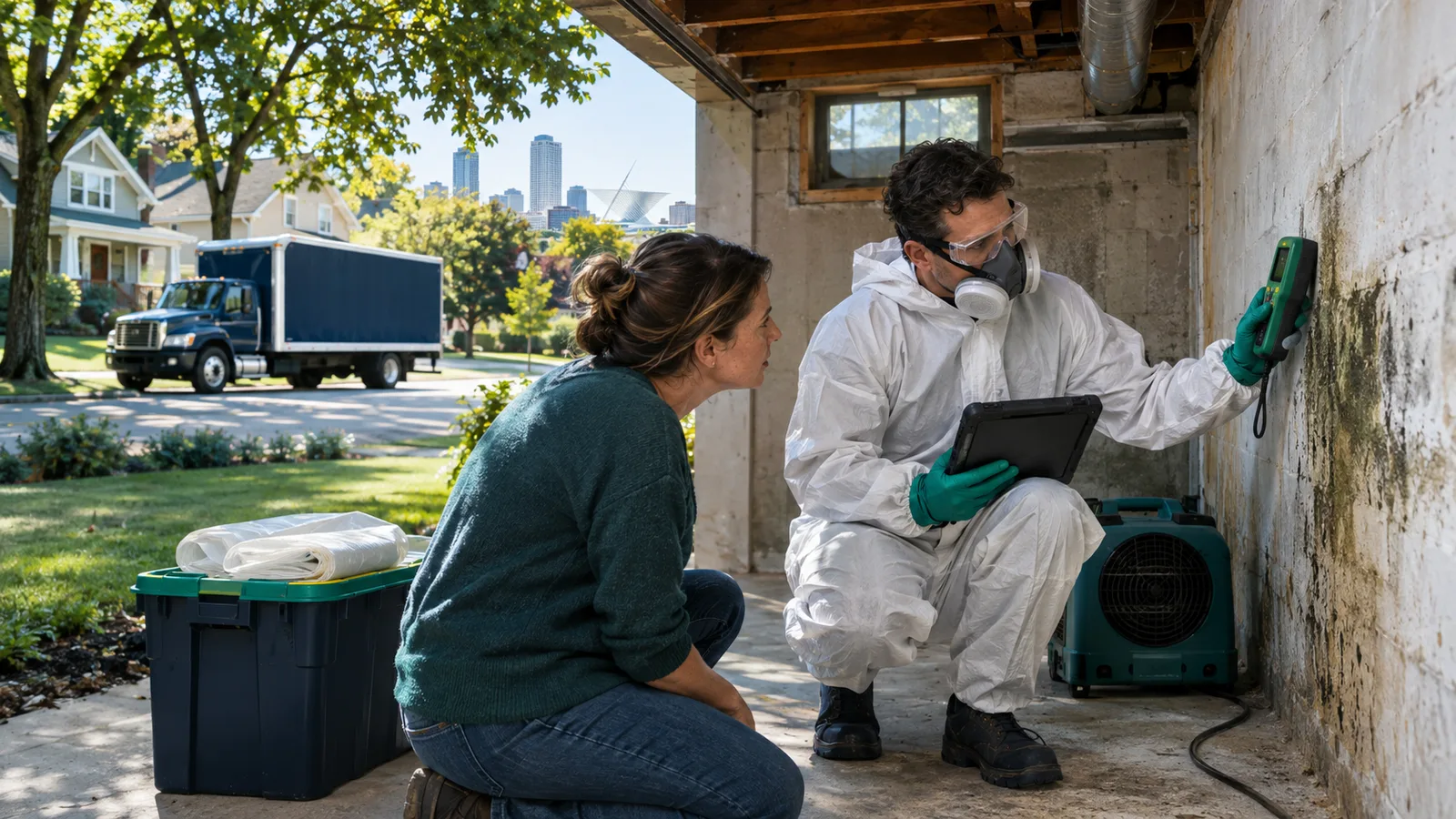
Milwaukee mold remediation should address contaminated materials and the moisture condition that allowed growth to occur. Mold Abatement Milwaukee starts by examining the affected area, looking for visible growth, checking moisture conditions, and determining how far the work may extend. You receive a defined scope based on what the property needs rather than a one-size-fits-all treatment.
As a professional mold company in Milwaukee, WI, we plan containment, removal, cleaning, and verification around the building and the affected materials. That distinction matters. Mold growing on nonporous tile may be cleaned, while contaminated drywall, insulation, or other porous material often needs controlled removal. Painting over growth or spraying a surface without correcting moisture can conceal the problem rather than resolve it.
The first concern is water. A roof or plumbing leak, foundation seepage, condensation, poor ventilation, or an indoor humidity problem can keep materials damp. Milwaukee's cold winters can also create condensation on poorly insulated surfaces, while snowmelt and heavy rain may expose basement water-entry issues. Remediation is more durable when the moisture source is identified and corrected.
Inspection and scope details
Each scope reflects the affected materials, moisture evidence, access, and controls appropriate for the property.
Book Your Free InspectionThe work begins with a visual assessment of affected spaces, moisture checks, and a review of where water may be entering or collecting. The findings guide containment and material-removal decisions.
Polyethylene barriers and controlled work zones help limit the movement of dust and spores. Negative air pressure and HEPA-filtered air scrubbers may be used when the scope calls for them.
Contaminated porous materials that cannot be effectively cleaned may be removed, bagged, and taken out through a planned route. The exact approach depends on material type, condition, and access.
Remaining surfaces can be HEPA vacuumed and damp wiped using products appropriate for the material. Cleaning is systematic because settled dust can carry particles outside the visibly affected spot.
Affected materials should be dry before reconstruction begins. The final recommendations identify moisture repairs or ventilation changes needed to reduce the chance of renewed growth.
A visual review confirms that specified materials were removed and the work area was cleaned. When independent sampling or clearance is part of the project, it should be planned in advance.

Mold does not behave differently because of a ZIP code, but Milwaukee building conditions affect where technicians look and how they set up the job. Bay View has many older homes where finished basements and enclosed wall cavities can hide water damage. Riverwest's older housing stock may include layered renovations, so access and material history deserve attention before demolition. In Sherman Park, masonry foundations and basements make drainage, seepage, and indoor humidity relevant inspection points.
Wauwatosa also has many established homes where additions, older foundation areas, and newer finished spaces may meet. Those transitions can conceal leaks or condensation. Shorewood properties often require careful containment and debris routing because homes can sit close together and interior access may be tight. These traits do not prove that mold is present. They simply shape a responsible investigation.
Properties near Lake Michigan can experience humid periods, but indoor moisture readings and direct building evidence matter more than assumptions based on location. A technician should follow staining, odor, material deterioration, and moisture patterns to their source.
Inspection-to-review sequence
We discuss the history of the problem, inspect accessible materials, and take moisture readings where appropriate. If the water source is active, stopping it becomes a priority before or alongside remediation.
The scope identifies affected rooms, materials to remove or clean, access needs, contents that require protection, and the equipment appropriate for the job.
Technicians isolate the work area as needed, protect travel paths, and establish air controls. Heating and cooling openings within the work zone may be sealed to reduce particle movement.
Unsalvageable porous materials are removed in a controlled manner. Remaining framing and other suitable surfaces are HEPA vacuumed and cleaned according to their condition.
The area is checked for visible dust, debris, and remaining affected material. Moisture conditions are reviewed before containment is removed or reconstruction starts.
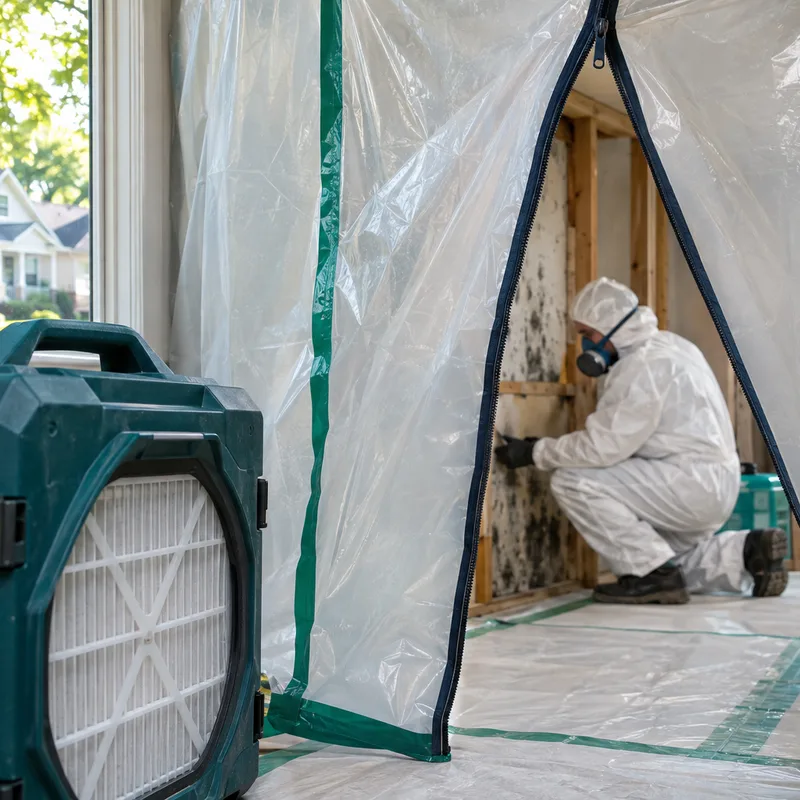
Mold remediation is controlled cleaning and removal, not ordinary demolition. Disturbing drywall, insulation, ceiling tile, or carpet can release settled particles. A work area may therefore need floor-to-ceiling barriers, sealed penetrations, and negative pressure. Technicians use personal protective equipment suited to the task, while HEPA-filtered equipment captures fine particles during cleaning.
Material porosity affects what can be saved. Glass, metal, and sound sealed surfaces can often be cleaned. Drywall, fiberglass insulation, and other porous products may need removal when growth has penetrated them or deterioration is extensive. Wood framing may sometimes remain after physical cleaning and drying, depending on its condition. Antimicrobial products can support a cleaning process when used according to their labels, but chemicals do not replace removal of damaged material or moisture correction.
The work area also needs a practical exit route for bagged debris. Occupancy, pets, shared hallways, furnishings, and heating or cooling systems all affect the plan. A written scope should state what is included, which areas are contained, and what conditions must be met before the project is complete.
Inspection-based pricing
Milwaukee mold remediation typically costs about $1,000 to $6,000, while limited accessible work may cost less and extensive contamination across multiple rooms can exceed $10,000. These are general, nonbinding ranges rather than a project quote.
Final price depends on affected square footage, material removal, containment level, access, equipment time, debris handling, and whether hidden damage is found. Leak repair, reconstruction, and independent laboratory testing may be separate. Mold Abatement Milwaukee confirms the exact cost after an inspection defines the work area and required controls.
Recognize the warning signs
Visible growth, a persistent musty odor, repeated staining, or materials that stayed wet after a leak are good reasons to arrange an inspection. Prompt assessment is also sensible after basement seepage, a plumbing failure, roof intrusion, or water damage behind cabinets and finished walls. If the moisture source remains active, correct it as soon as practical.
Do not disturb a large or uncertain area before the inspection. Scrubbing, sanding, pulling down drywall, or running a household fan across visible growth can spread dust and make the original boundaries harder to assess. Photograph the condition, note when it appeared, and record known leaks or repairs. Keep people and pets away when materials are deteriorated or the affected room can be closed safely.
Mold Abatement Milwaukee handles residential and commercial concerns. Commercial planning may account for occupants, operating hours, shared air systems, inventory, and phased access. Residential work may need added protection for belongings and occupied rooms. In either setting, the scope should be based on observed conditions, moisture evidence, and the materials involved.
Get a written scope that identifies the affected area, planned controls, material decisions, and moisture concerns before remediation begins.
Book Your Free InspectionClear answers before work begins
A limited, accessible project may take a few working days, while larger or concealed conditions can take a week or longer. Containment setup, material removal, cleaning, equipment time, and drying all affect the schedule. Milwaukee basement projects may also pause until seepage or another active water source is corrected.
Testing is not always necessary when visible growth and the moisture source can be clearly identified. Sampling may be useful when the source is uncertain, documentation is required, or an independent clearance protocol is requested. If testing is part of a Milwaukee project, the sampling plan should answer a specific question rather than simply confirm that mold exists in the environment.
Whether you can remain depends on the location, size, containment plan, and needs of the occupants. A contained basement work zone may allow normal use of upper living areas, while work near bedrooms, kitchens, or a central air-handling system may require temporary relocation. The occupancy plan should be settled before work begins.
Coverage usually depends on the cause of the moisture and the terms, exclusions, and limits in your policy. Sudden covered water damage may be treated differently from long-term seepage, maintenance issues, or humidity. Notify your insurer promptly, preserve photographs and invoices, and ask what documentation or preapproval it requires.
The work scope may need to expand if concealed growth or wet material is found beyond the original boundary. The team should document the condition, explain the added containment or removal required, and confirm any price change before proceeding. Older Milwaukee homes can contain multiple wall finishes or prior renovations, so controlled openings are often more useful than broad demolition.
Remediation removes affected material and contamination within the defined scope, but lasting control depends on keeping the area dry. Plumbing defects, roof leaks, foundation water entry, condensation, and ventilation problems must be addressed. Maintaining reasonable indoor humidity and responding quickly to new water events also reduces future risk.
Contaminated drywall and insulation often require removal because their porous structure can hold growth and debris. The decision depends on the extent of contamination, material condition, and whether effective cleaning is possible. Sound framing may sometimes remain after detailed cleaning and drying, while damaged porous finishes are removed under containment.
Tell Mold Abatement Milwaukee what you have seen, smelled, or found after a water event. We will assess the conditions and explain the appropriate scope, controls, and next steps for your property.