
Basement wall bases
Where seepage or a past flood kept drywall and paneling wet.
Dark growth on walls
Dark spots on drywall or basement walls? Have the growth removed without spreading spores, and the moisture behind it fixed.

Dark green or black growth gets most of the worry, but the color doesn't tell you the type. Only a lab can say that. What matters for removal is how much there is, what it's growing on and why that spot stayed wet.
Black mold remediation follows the same rules as any other growth: close off the area, run a HEPA air scrubber, cut out porous materials and clean the rest. Scrubbing it in the open can send spores into the furnace and other rooms.
Black mold cleanup in basements usually means drywall and paneling along the bottom of the walls, plus anything stored against them. Mold in basement corners often traces back to a downspout or a crack in the foundation.
Local moisture
The Milwaukee area gets about 34.7 inches of precipitation a year, and Milwaukee County averages about 12 flood events a year. Each one is a chance for water to reach basement walls or seep in under doors.
Dark growth usually shows where water sat longest: behind a leaking toilet, under a window with failed caulk, or on drywall that touched a wet slab. Black mold mitigation starts by finding that water, because the growth returns if it stays.
Homes in Milwaukee, Wisconsin with older foundations see it most along the wall base. The fix there is often outside the house: extending downspouts and sloping soil away from the foundation.
Common spots
Dark growth favors places that stay damp and don't get much air.
Call (414) 519-6916Where seepage or a past flood kept drywall and paneling wet.
Around leaking supply lines, drain pipes and the backs of showers.
Above showers where a weak or missing fan leaves steam to condense.
Where winter condensation runs down cold glass and soaks the wood.
Where bathroom fans vent into the attic or warm air leaks up in winter.
Dark spots coming back after cleaning? The source is still wet.
Call (414) 519-6916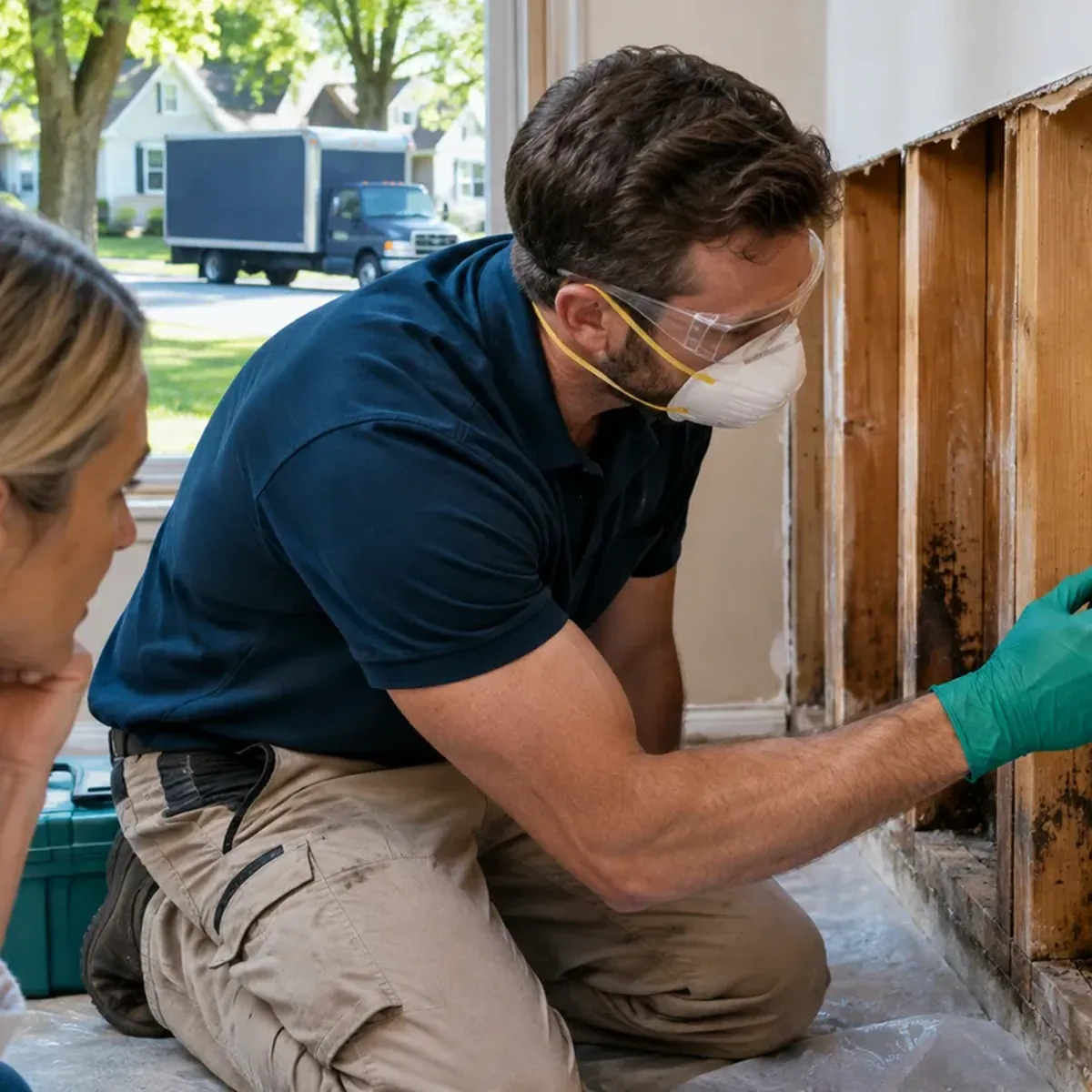
Cleaning black mold off painted drywall removes the stain, not the growth inside the paper and gypsum. That's why moldy drywall is cut out and replaced rather than wiped.
Hard surfaces like tile, metal and sealed concrete can be cleaned and kept. Wood framing is HEPA vacuumed, cleaned and treated, and only replaced when the wood has gone soft.
Black mold removal ends with HEPA vacuuming across the whole work area, because the dust settled during the work carries spores too. For a whole-house plan and the mold abatement cost to expect, compare the main service options.
Typical prices
Most jobs to remove dark mold here typically cost about $850 to $2,200, and larger jobs that open walls or ceilings can run past $3,000. These are typical local ranges, not quotes.
The bill climbs with the square footage of dark growth, the drywall behind it and how awkward the space is to work in. A bathroom ceiling costs far less than a finished basement wall after a flood.
The plumber or roofer who stops the water, and whoever hangs new drywall, bill on their own.
Straight answers
Yes. Black mold removal is available across Milwaukee, WI and South Milwaukee; call (414) 519-6916 to describe it.
Color doesn't show the type, and any heavy growth indoors is worth removing. Removal is planned by size and location, not color.
Small spots on hard surfaces can be cleaned with care. Growth larger than a few square feet, inside walls or after a flood is better handled under containment.
Usually not. When growth is visible and the water source is known, removal can start; testing helps when the extent is unclear.
Steam condensing on the ceiling keeps it damp. A properly sized fan vented outside, run during and after showers, usually stops it.
Tell us where the dark growth is and how big it looks. That's enough to start planning the removal.